
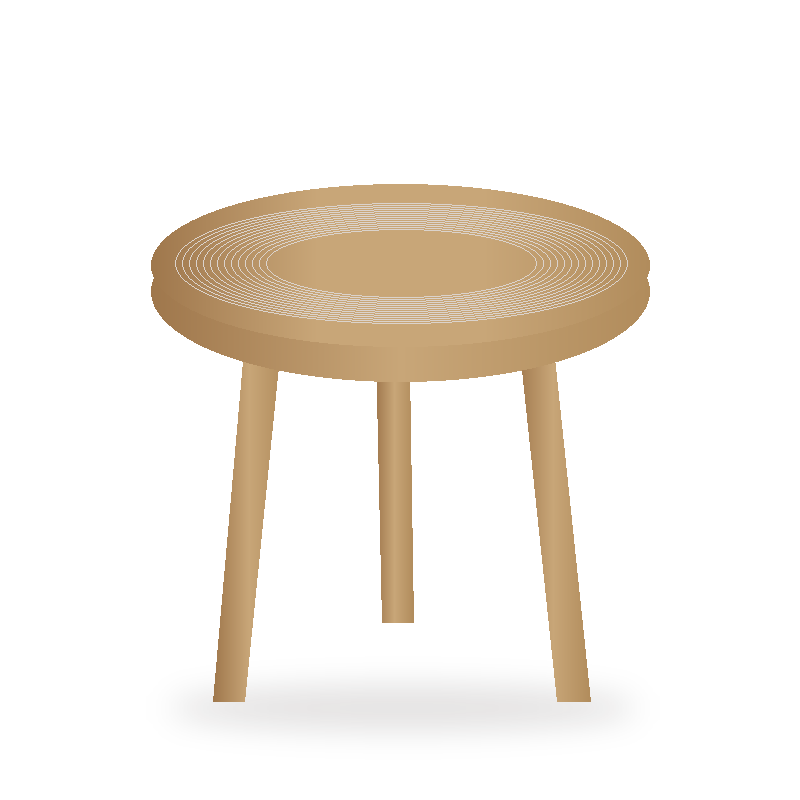
Define the everyday use
List what the table needs to hold. A lamp, a cup and a book require usable surface, not just a pleasing overall silhouette. A rim, uneven surface or shaped edge can reduce the area that is convenient for placing things.
Measure the intended space and the seat or bed beside it. Check the height from the position where you will reach for the table. A measurement on a product page is useful only when you have something in your room to compare it with.
A table may be 45 cm wide at its widest point while offering a smaller flat surface. For a lamp, ask for the usable top dimensions as well as the overall width, depth and height. A photograph does not confirm the tabletop’s load capacity.
Allow for movement and access
Mark out the proposed footprint. Include any drawer, door or moving part in its open position, then check how people pass the table and sit down beside it. Consider the legs as well as the top: a pedestal and widely spaced legs occupy the floor differently.
For nesting tables, record each component’s dimensions and how the pieces sit together. Think about where the second table will go when it is pulled out. The overall dimensions of the largest piece will not describe the whole set in use.
Check delivery and assembly information against the route into the room. A product that fits its final position still needs to get through the relevant access points.
Keep materials and configurations precise
Separate material from finish: solid timber, veneer and a wood-effect surface describe different constructions. If a listing is unclear, keep that uncertainty visible. Ask about the actual surface and follow the supplier’s care guidance.
Compare a single table with a single table, or a named set with the same number of pieces. Note whether assembly is required and whether the pictured shelf or accessory is included. Keep delivery costs separate from the item price.
A small table can connect with a room without repeating every material. Consider the balance of shapes: a round top beside a rectangular sofa, a slender frame alongside a heavier cabinet, or a painted piece that repeats a colour in a rug. Let function set the limits before choosing that relationship.
Before you decide
- Intended use and the objects it needs to hold.
- Overall width, depth and height; usable top dimensions.
- Leg footprint, opening drawers and everyday routes.
- Material, finish, care and stated load information.
- Single versus set, each component, assembly and delivery.